
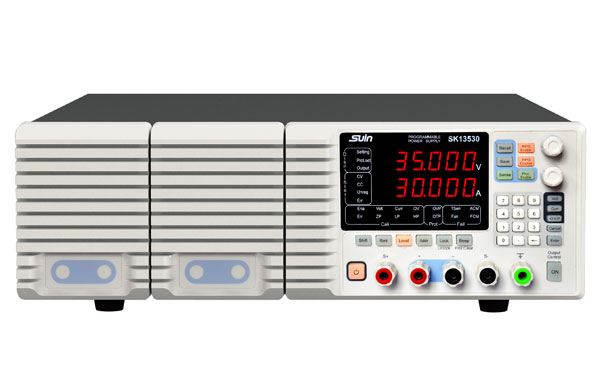
A programmable power supply offers remote control capacity of the output voltage(s) via an analog controller controlled by keypad or rotary switch from the front panel of the power supply or by means of a computer interface like RS232, GPIB, or even USB. Programmable functions could include voltage output, present, and -- in the case of an AC power supply -- frequency.
A High Voltage Power Supply includes a processor, voltage and current programming circuitry, a current shunt, and a readback circuit for voltage and current. Additionally, a programmable power supply may include overvoltage, overcurrent, and short circuit protection as well as temperature payment.
Switch Mode Power Supply can be located in many applications such as automated equipment testing and smart debugging. Many bench power supplies include capabilities that enable the user to define several user profiles, allowing the user to define duration and outputs of numerous steps and then allow the instrument to automatically measure through the predetermined sequence(s).
Jul. 16, 2026
Power Quality Analyzer Buying Guide: How to Choose the Right ModelJun. 18, 2026
Dragon Boat Festival Holiday NoticeJun. 16, 2026
RF Signal Generator Selection Guide Based on Key Performance Specifications