News
Home - News-What should be noticed in the use of digital multimeters

What should be noticed in the use of digital multimeters

Mar. 09, 2017

In order to safe and normal use of digital multimeters, you need to pay attention to several points:

1, please do not use the instrument in the environment of explosive gas, water vapor or dust.

2, please do not enter the rated voltage of the meter on the meter terminal (two input terminals, or any input terminals and earth).

3, before use, digital multimeters should be used to measure a known voltage to confirm that the instrument is normal.

4, when measuring the current, connect the instrument to the circuit, please turn off the power supply of the circuit.

5, when the instrument is maintained, please use only the manufacturer's label or components.

If you need, we can supply signal generator, digital multimeters, spectrum analyzer etc. Welcome to contact us.
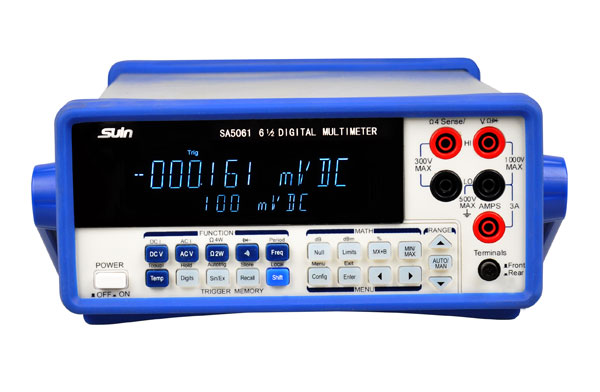
digital multimeters

Latest News

Aug. 25, 2026

Meet SUIN at Electric&Power Indonesia 2026
Our company will take part in Electric&Power Indonesia 2026 on September 02 to 05, 2026 at booth 3134, Hall A3. Our flagship power quality analyzer series--SA2110(Class S), SA2200(Class A) and SA2300(Economical) will be displayed on that exhibition. Welcome to visit our booth for face-to-face communication!
Learn More

Aug. 21, 2026

How to Use a Power Quality Analyzer to Troubleshoot Repeated Equipment Trips
Unexpected equipment trips are a common problem in industrial electrical systems. A machine may stop several times a week, a variable frequency drive may occasionally report an overvoltage or undervoltage fault, or sensitive equipment may restart without an obvious reason.
Learn More

Jul. 16, 2026

Power Quality Analyzer Buying Guide: How to Choose the Right Model
Suin supplies various standard power quality analyzers: Class A Power Quality Analyzer SA2200, Class S Power Quality Analyzer SA2110 ,Power Analyzer SA2300.Choosing the right power quality analyzer requires a clear understanding of your application requirements, measurement parameters, accuracy standards, and data analysis capabilities.
Learn More