
Getting the perfect RF signal generator is the secret to unlocking precise and dependable test outcomes. As an engineer, you need to find an instrument that stands up to your expectations and caters to your unique needs. Here are some key factors to consider when selecting an RF signal generator.
The frequency range of an RF signal generator is critical in determining its suitability for your application. Ensure that the generator covers the entire frequency range of your target system, from the lowest to the highest frequency. This will allow you to test and analyze various components and systems effectively. TFG3600 Series can provide 500 MHz to 1500 MHz signal, if you need higher frequency instrument, please inquire us.
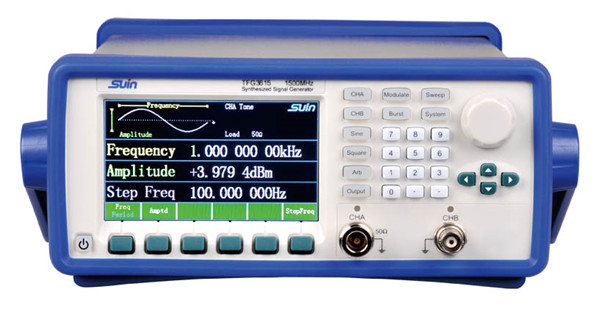
Fig.1 TFG3600 outlooking
The output power of an RF signal generator determines the signal strength it can produce. Depending on your application, you may require a generator with high output power to test devices with high attenuation or a generator with a wide dynamic range to evaluate the performance of components under varying signal strengths. Ensure the chosen instrument can deliver the output power levels required for your tests. TFG3600 Series can output -127dBm ~ +13dBm typical level.
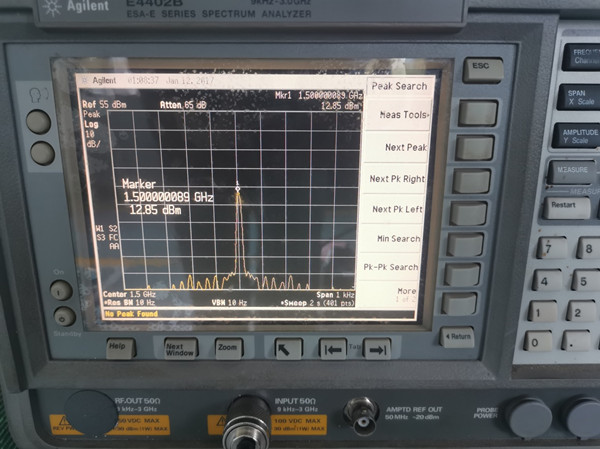
Fig.2 +13 dBm amplitude output by TFG3600
Different applications may require different types of modulation, such as amplitude modulation (AM), frequency modulation (FM), phase modulation (PM), or digital modulation schemes like quadrature amplitude modulation (QAM). Choose an RF signal generator that supports the modulation types relevant to your target system, ensuring you can accurately test and evaluate various communication scenarios. TFG3600 Series can provide AM, FM, FSK, PSK modulation.
The accuracy and stability of an RF signal generator directly impact the quality of your test results. When selecting a generator, consider factors like frequency accuracy, phase noise, and temperature stability. High-quality instruments with excellent precision and stability will ensure that your measurements are precise and reliable, ultimately leading to better test outcomes.
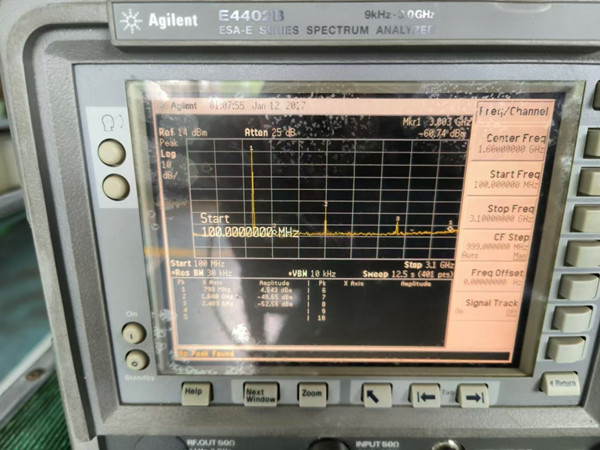
Fig.3 Spectrum Purity of TFG3600(including Harmonics and non-harmonics)
Rf signal generators with direct user interface can quickly configure devices, meanwhile, for bulk measurement, strong programming interfaces(eg. SCPI commands) and common interfaces(eg. LAN, USB) means that it can easily enter auto measuring system. TFG3600 Series are configured with standard RS-232 and USB Device interfaces which will be more convenient for remote control measurement.
Jul. 16, 2026
Power Quality Analyzer Buying Guide: How to Choose the Right ModelJun. 18, 2026
Dragon Boat Festival Holiday NoticeJun. 16, 2026
RF Signal Generator Selection Guide Based on Key Performance Specifications